


By the time most people are winding down, Gigi Jasmine is just getting started.
The lights are low. The crowd is thick. And somewhere behind the decks, a woman is reading the room, reading it the way a novelist reads a draft, knowing exactly where to push, where to pull back, and when to let the story breathe. That woman is Gigi Jasmine: DJ, entertainer, media personality, and one of the most compelling voices to emerge from Nigeria’s nightlife scene in recent years.
At 32, Gigi carries herself with the quiet certainty of someone who has fought hard for her space in a demanding industry. But behind the magnetic stage presence and the high-energy sets that have taken her from Lagos clubs to international venues in Tanzania, there is a story most people never get to hear. A story of discipline, of doors slammed in her face, of assumptions made before she ever pressed play. A story she is finally ready to tell in full.
She Was Born Into the Music

Some people find music. Gigi Jasmine was found by it.
Growing up, her father, a professional DJ filled the house with sound. Not just Afrobeats or the Nigerian sounds you might expect, but everything: European techno, deep house, classical, jazz. Music, in their home, was a language everyone spoke.
“My dad is a professional DJ so I grew up listening to all types of music,” she says. “Especially anything from Europe, techno-wise. Music always ran in our family growing up.”
But Gigi didn’t just absorb music passively. She trained in it. For fifteen years, she was a classically trained flutist, a detail that surprises most people when they learn it, but shouldn’t. It explains the precision in her sets, the musicality behind her transitions, the way she understands not just beats, but composition. When Gigi plays a room, she isn’t just stacking songs. She is building something.
Her formal road to the decks, however, took a detour through radio. She joined the industry as a broadcaster, but quickly found that the format chafed against her instincts.
“I was originally on radio and quickly found out I did not enjoy talking within constraints,” she recalls with a laugh. “My favorite times were to clear out all the music the librarians would put up and then make my own playlists.”
It was the in-house DJs who saw what she couldn’t yet fully see in herself. They told her she should give it a shot. In 2019, she listened. She quit radio, enrolled in a DJ academy, and stepped into a world that would both challenge and transform her.
“The rest,” she says simply, “has been an amazing dream.”
The Night Tanzania Changed Everything
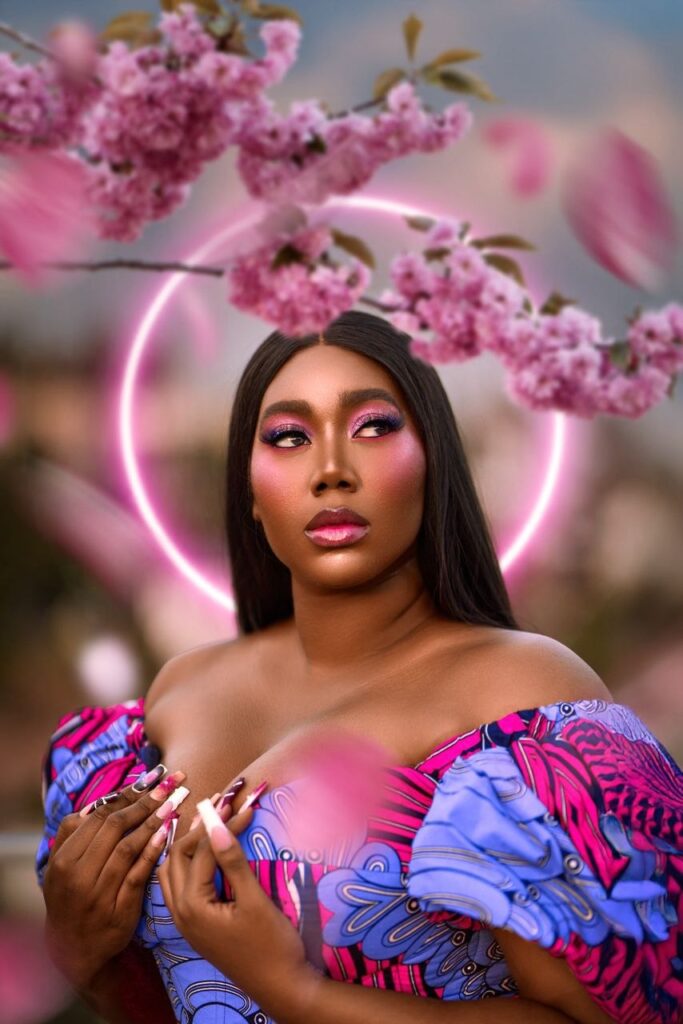
Every artist has a moment that crystallizes their belief in themselves. For Gigi, it came in 2023, in the form of a plane ticket and a set in East Africa.
She had been invited to Tanzania to play for the opening of a major club, an international gig, the kind that signals you have crossed an invisible threshold from local act to global name. She remembers the disbelief she felt when the booking came through.
“I was shocked because I could not believe that my laptop and my dreams could get me booked for international gigs,” she says. “It gave me the validation that I needed that I was on the right path.”
There is something quietly powerful about that image: a woman and her laptop, building a career note by note, set by set, until the world comes calling. No shortcuts. No favors. Just craft.
That Tanzania gig wasn’t just a career milestone. It was confirmation of a philosophy Gigi has held from the very beginning… that merit, not leverage, is the only currency worth trading in.
What They Don’t Tell You About Being a Woman Behind the Decks

The nightlife industry is one of the last spaces where women are simultaneously hyper-visible and professionally invisible. On one hand, women are everywhere in clubs, on flyers, on stages, used as visual currency to pack a venue. On the other hand, when a woman steps behind the booth, the room often greets her with skepticism before a single beat drops.
Gigi knows this terrain intimately.
“A lot of people would sexualize me or ask me to do favors for them in order to be booked for gigs,” she says directly, without flinching. “Most people assume I am not as good as the guys before I even press play. It was frustrating but I kept pushing.”
The proposition she describes, trade access for proximity is one that women across industries know well. In nightlife, it wears a particular face. The assumption that a woman’s presence in a club must be transactional. That her success must owe itself to something other than skill. That the booth is, in some unspoken way, not really hers to occupy.
“A lot of people assume that since I work mostly at night, I must be a ‘lady of the night’,” she says, using the phrase with a frankness that refuses to be shamed by it. I do not trade sexual favors to get where I want to go.”
Gigi is equally clear-eyed about the broader culture of slut-shaming women in nightlife. While the industry often leans on the idea that “sex sells,” she is intentional about not allowing that expectation to define her work or her identity.
“Yes the advertising idea is that ‘sex sells’ but I am not pushing that narrative,” Gigi says. “I am pushing the narrative that I can be just as good as the boys WITHOUT compromising my morals.”
It is a distinction worth sitting with. There is a difference between an industry that sexualizes women and a woman who owns her sexuality. Gigi understands that difference deeply, and she refuses to let the industry’s failures become her identity.
The Armor She Wears And the Woman Underneath It

Watching Gigi perform, you see someone completely in command. The crowd, the energy, the room, she owns all of it. What you don’t always see is the cost of building and maintaining that kind of presence in a world that is constantly trying to undermine it.
When asked how she stays confident in the face of criticism and assumption, her answer is stripped down and honest: “I silence the noise. I know what my goals are and I know exactly what I want. I continue to show up and do my job no matter what.”
But beyond the confidence she projects publicly, Gigi is intentional about reminding people that there is still a human being behind the performance. Behind the armor is a human being.
“I am HUMAN too,” she says, with the kind of emphasis that suggests she needs people to really hear it. “Sometimes my job is to shut out my feelings and play for the crowd but I too have emotions.”
It is a quietly radical thing to say in an industry that profits from women appearing invulnerable. To admit that performing strength is itself a kind of labor. That the woman behind the decks is not a machine, she is someone who arrived that night carrying everything she carries, and chose to show up anyway.
Big Brother, Bigger Platform
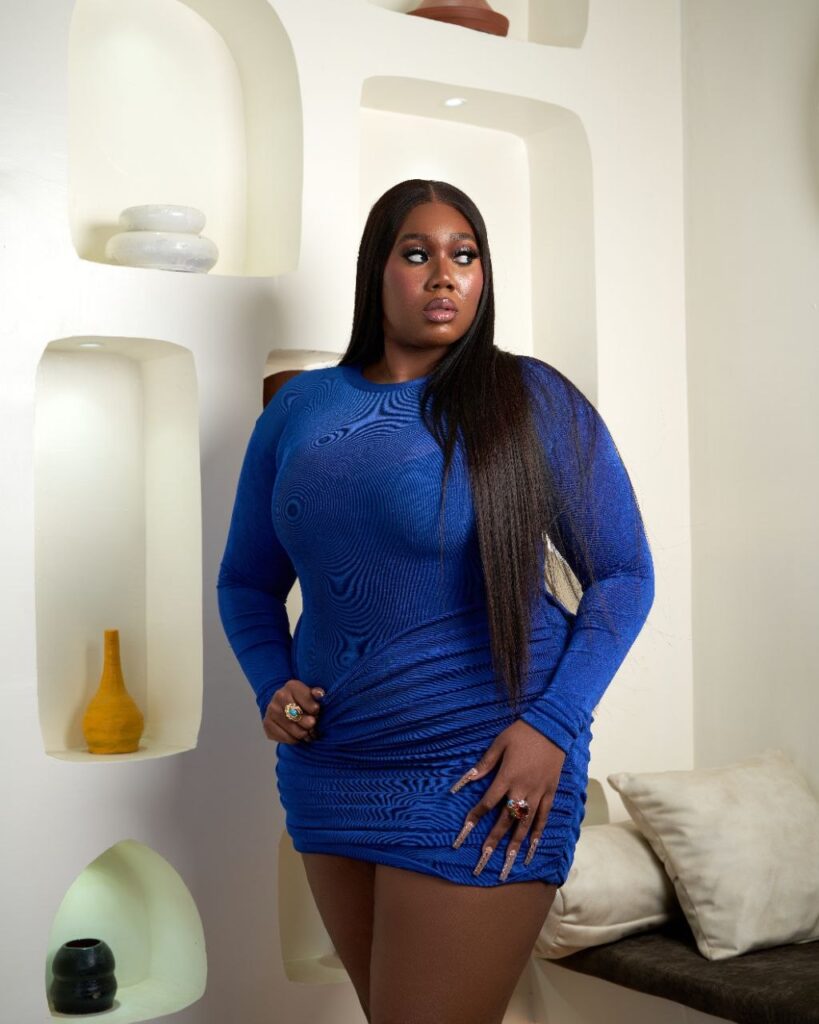
Beyond nightlife, Gigi Jasmine has also stepped into the reality television space through Big Brother Naija, expanding her visibility beyond the club circuit. The show, one of Africa’s most-watched reality television franchises, put her in front of an audience that might not have found her through the club circuit alone.
For a DJ, visibility is infrastructure. The more people know your name, the more doors open, the more stages become available. Gigi understands this calculus with the sharpness of someone who has had to build her audience brick by brick.
“I see that the harder I work, the bigger the gigs I get,” she says. “The bigger the gigs I get, the more recognizable my name becomes.”
She is deliberate about what that visibility is used for. Not just bookings. Not just numbers on a screen. But something more durable: a legacy that younger women can point to as proof that another way is possible.
“I hope that they see that you do not have to compromise your morals to be successful,” she says of the women who look up to her. “You truly can achieve greatness based on your merit and skills alone.”
What the Night Has Taught Her

Seven years behind the decks will teach you things that no academy curriculum covers. Gigi has learned to read a room, yes but she has also learned to read people. And nightlife, she says, is a masterclass in human nature.
“Not everyone you smile with is your friend,” she says, without bitterness. “You have to watch your back and make meaningful relationships. There is more value in quality than there is in quantity.”
She applies that same discernment to her career. In a world where DJs are often pressured to take every gig they can get to build momentum through sheer volume… Gigi counsels selectivity.
“One should be selective and choose the gigs that move their career in a direction that best represents their brand.”
It is advice that runs counter to the hustle mythology that dominates creative industries. But it is the advice of someone who has learned, sometimes the hard way, that not all exposure is good exposure, and not all rooms are worth playing.
Just a DJ. Nothing Less.
If you ask Gigi Jasmine what she wants the world to understand about her, she gives you a placard-ready answer that is also, underneath its simplicity, a years-long argument compressed into a single sentence:
“I am a DJ, not just a FEMALE DJ. My gender does not box me in.”
It sounds like a small thing. It is not. In an industry where women are perpetually categorized as a subset where “female DJ” is still spoken as though it describes a niche rather than a professional, that refusal to be diminished is an act of ongoing resistance.
Being a woman in nightlife, Gigi says, means “being misunderstood at times but I will have the last laugh.”
There is something in that line that feels true not just for Gigi, but for every woman who has ever walked into a room and been underestimated. Every woman who has been told, implicitly or explicitly, that her presence in a certain space is conditional. Every woman who showed up anyway, did the work anyway, and let the results speak for themselves.
In a space that often underestimates women, Gigi Jasmine is determined to let her work speak for itself.
Follow Gigi Jasmine on Instagram, TikTok, and Snapchat: @djgigijasmine
